
Restraint Free, Fear Free, Drug Free
Nail Care Training
This is training geared towards improving your dog's comfort and confidence during grooming sessions. Although we focus on applying our training model to nail maintenance, this model, based on counter-conditioning and desensitization, can be applied in many other contexts. This approach involves slowly and calmly working through a set of stages to reach a desired outcome.

Relax
To begin training, your dog must learn to relax in the presence of visitors and be comfortable with others petting them.
Lay down
In order to have their nails done, your dog needs to be able to either lay down, sit, hold shake a paw, or maintain another position that works for them.
Many dogs don't like their paws held and that's okay - that is not necessary for this training.
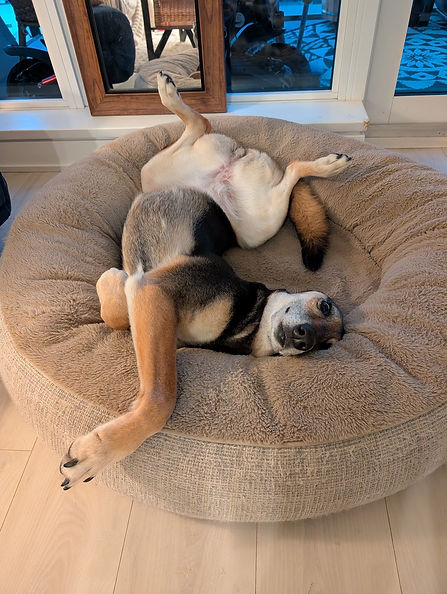

Paw handling
Once your dog is relaxed and in a position they feel comfortable holding, we slowly work up to prolonged handling of their paws.
Nail tool
Once your dog feels comfortable having their paws touched, we can start to introduce the nail tools. This can look like letting them sniff the tool and getting them used to having the tool nearby before it makes any contact with their nails.
The next step is to get them used to having the nail tool touch their nails, slowly working our way towards clipping down on the nail.

Other considerations
-
Take note of what motivates your dog. Are they treat motivated? What treats are most motivating? Are pets and praise enough to keep them laying down and interested in participating in their training?
-
Take note of what keeps your dog calm. Are they calmer in a quiet room? Or when you're quietly chatting with them? When there's less people in the room, or when you're in another room?
-
You can increase the chances of your dog moving through these stages by working on the first two stages with them (Relax with visitors, Lay down) before the first session.
-
You can decrease the amount of training sessions needed by working on the stages between sessions.
-
Some dogs may take longer to progress through the stages.
-
Not all dogs get their nails clipped in the first session.
-
Dogs should not be in heat or have a current injury that causes pain while participating in cooperative care training.
-
This type of training is not for aggressive or human reactive dogs. Dogs with a history of aggression or biting should seek training from a behavioural specialist.
-
Each session is designed for one dog at a time. Please have their favourite treats on hand. In some circumstances many treats will be used, if you are worried about calorie intake please reduce your dogs next meal by the appropriate amount.